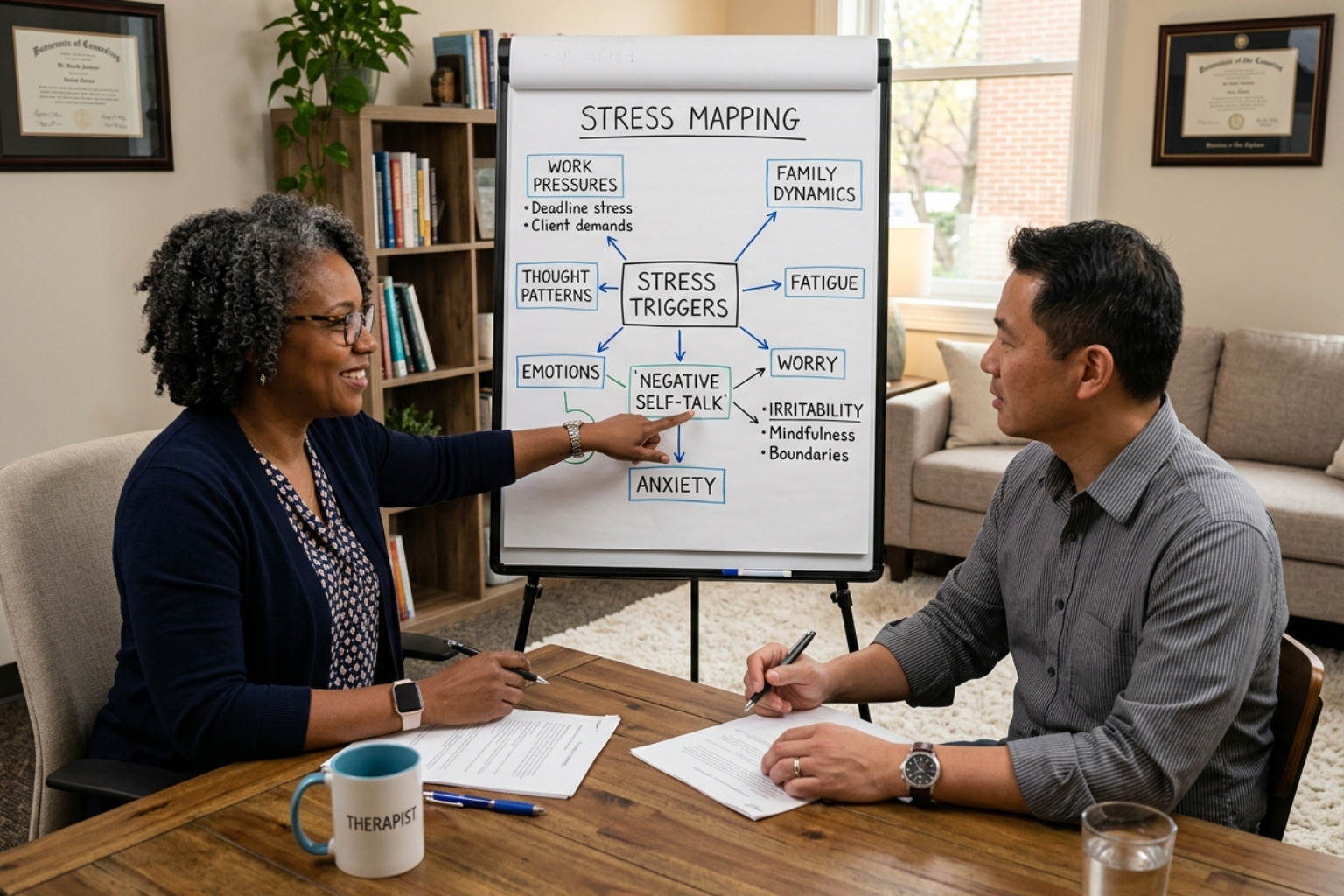
 Stress is a common part of life, but for someone recovering from addiction, it can become a powerful trigger for returning to substance use. Financial pressure, relationship conflicts, work demands, loneliness, and unexpected changes can create emotional strain that makes old coping habits seem appealing again. Addiction relapse prevention starts with understanding these triggers and learning healthier ways to respond to them. Professional counseling can help individuals recognize their stress patterns, manage difficult emotions, and develop practical skills that support lasting recovery.
Recovery involves more than stopping alcohol or drug use. It also means learning how to handle everyday challenges without relying on substances for relief. With individualized counseling, appropriate treatment, and ongoing support, people can build greater emotional stability and protect the progress they have made.
Understanding the Connection Between Stress and Addiction Relapse
Stress affects both the body and the mind. When pressure builds, a person may experience anxiety, irritability, sleep problems, racing thoughts, or difficulty concentrating. For someone with a history of substance use, these feelings can bring back memories of using drugs or alcohol to escape discomfort.
Substances may have provided temporary relief in the past. However, that relief often came with consequences, including worsening mental health, damaged relationships, financial difficulties, or declining physical health. During recovery, familiar stressors can reactivate the desire to return to those patterns.
Common Stress Triggers During Recovery
Everyone experiences stress differently. However, several situations frequently increase the risk of relapse:
- Relationship difficulties: Arguments, unresolved conflict, and feelings of rejection can intensify emotional distress.
- Work and financial pressure: Deadlines, job insecurity, and money concerns can make daily responsibilities feel overwhelming.
- Loneliness and isolation: Limited social contact may leave people without the encouragement they need during difficult periods.
- Mental health symptoms: Anxiety, depression, and unresolved emotional pain can make it harder to manage stress without professional support.
- Major life changes: Moving, changing jobs, ending a relationship, or returning home after treatment can disrupt familiar routines.
- Recovery fatigue: Maintaining healthy habits and resisting cravings can feel exhausting, particularly when several challenges occur at once.
Recognizing these patterns is an important first step. Once individuals understand what increases their vulnerability, they can work with a counselor to prepare for challenging situations before they become overwhelming.
How Counseling Helps Prevent Addiction Relapse
Counseling provides a structured setting where people can examine their experiences, understand their reactions, and practice healthier responses. Rather than simply telling someone to avoid stress, a counselor helps them identify what they can change, what they need to accept, and how they can respond constructively.
Identifying Triggers and Early Warning Signs
Relapse often develops through a series of changes rather than a single decision. Someone might begin sleeping poorly, withdrawing from supportive friends, skipping counseling appointments, or thinking more frequently about past substance use. These changes do not guarantee a relapse, but they can signal that additional support is needed.
A counselor can help clients recognize their personal warning signs and connect them to specific triggers. For example, someone who experiences cravings after workplace conflict might discover that criticism brings up feelings of shame or failure. Understanding this connection makes it easier to respond intentionally instead of reacting automatically.
Keeping a simple record of stressful events, emotional reactions, cravings, and coping responses can also reveal recurring patterns. Over time, this awareness supports more effective relapse prevention planning.
Developing Healthier Coping Skills
One of the central goals of addiction counseling is to replace harmful coping habits with practical alternatives. These skills need to work in real situations, including moments when emotions feel intense or a craving appears unexpectedly.
Depending on individual needs, counseling may help people practice:
- Deep breathing and grounding exercises to manage immediate tension.
- Cognitive behavioral techniques to challenge unhelpful thought patterns.
- Problem-solving strategies for addressing manageable sources of stress.
- Communication skills for setting boundaries and resolving disagreements.
- Mindfulness practices that encourage awareness without acting on every thought or urge.
- Planning and time management to reduce avoidable pressure.
- Reaching out to trusted people before distress becomes difficult to manage alone.
For example, a person who feels overwhelmed after an argument might previously have turned to alcohol or drugs. With counseling, that individual can learn to pause, regulate their emotions, contact a supportive person, and revisit the conflict when they feel more prepared.
These strategies become more useful through regular practice. The goal is not to eliminate stress completely, but to increase the ability to handle it without returning to substance use.
Treating Mental Health and Addiction Together
Stress can become especially difficult to manage when it overlaps with anxiety, depression, trauma, or other mental health concerns. In these circumstances, addressing substance use alone may leave important sources of distress unresolved.
Integrated addiction and mental health treatment considers how these challenges affect one another. A person may use substances to cope with anxiety, while substance use may also worsen anxiety symptoms over time. Without support for both concerns, the same cycle can continue.
The Value of Individualized Counseling
There is no single recovery plan that works for everyone. Personal history, substance use patterns, mental health needs, family relationships, physical health, and cultural or spiritual values can all influence the type of support a person needs.
Individualized counseling allows treatment to reflect these differences. Some people may benefit from cognitive behavioral therapy, while others may need trauma-informed support, family counseling, group therapy, or additional psychiatric care.
Counseling can also help clients establish realistic goals. Instead of trying to solve every problem at once, they can focus on manageable steps, such as improving sleep, attending appointments consistently, practicing one new coping strategy, or rebuilding a supportive relationship.
When treatment reflects a person’s circumstances and preferences, recovery strategies are more likely to feel relevant and sustainable.
Building a Daily Routine That Reduces Stress
Counseling works best when the skills learned in sessions become part of everyday life. A stable routine can reduce uncertainty, protect emotional well-being, and make it easier to recognize when stress is increasing.
Prioritize Sleep, Nutrition, and Physical Activity
Poor sleep and irregular meals can contribute to irritability, low energy, and difficulty managing emotions. Regular sleep schedules, balanced meals, adequate hydration, and appropriate physical activity support general health and can make daily stress easier to handle.
These habits do not replace professional treatment. Instead, they complement counseling by supporting the physical and emotional resources needed for recovery.
Make Room for Meaningful Activities
Recovery can feel isolating when substance use once occupied a large part of daily life. Reintroducing enjoyable and meaningful activities helps create a life that offers more than avoiding substances.
Depending on personal interests, this might include spending time outdoors, pursuing creative hobbies, volunteering, connecting with family, or participating in a faith community. Some people find spiritual practices helpful, while others prefer secular approaches to reflection and personal growth.
The important point is to build a routine that reflects individual values and provides healthy ways to experience connection, satisfaction, and purpose.
Strengthen Your Support Network
Stress becomes harder to manage when people feel they must handle everything alone. A reliable support network can provide perspective, encouragement, and accountability during difficult periods.
This network might include trusted friends, family members, counselors, peer support groups, or recovery communities. Counseling can help individuals identify safe relationships, communicate their needs, and set boundaries with people or situations that undermine recovery.
It can also help family members understand how to offer support without taking responsibility for another person’s recovery. Clear communication and realistic expectations can reduce conflict and create a healthier environment for everyone involved.
Choosing the Right Level of Addiction Treatment
The appropriate level of care depends on the person’s symptoms, substance use history, living environment, medical needs, and available support. Counseling may be part of outpatient treatment, an intensive outpatient program, or a residential treatment plan.
Outpatient care allows individuals to attend treatment while continuing many everyday responsibilities. It may be suitable for people whose needs can be safely managed outside a residential setting. More intensive outpatient services offer additional structure, while residential treatment provides a setting with greater supervision and separation from everyday triggers.
A qualified treatment professional can help determine which option is appropriate. For some individuals, medical assessment or supervised withdrawal management may be necessary before counseling can become the primary focus. Alcohol or sedative withdrawal can be dangerous, so people who may be physically dependent should seek medical guidance rather than stopping suddenly without support.
Regardless of the setting, continuing care matters. Regular counseling, relapse prevention planning, and follow-up support can help people address new stressors as their circumstances change.
What to Do When Stress and Cravings Increase
Experiencing cravings during recovery does not mean that treatment has failed. It is an opportunity to use the skills developed through counseling and seek additional help when needed.
If stress begins to feel unmanageable, consider these steps:
- Pause and identify the trigger. Ask yourself what happened, what you are feeling, and whether a particular thought or situation is increasing the urge to use substances.
- Create distance from immediate risks. If possible, step away from environments, people, or situations that make substance use more likely.
- Use a practiced coping strategy. Try grounding, slow breathing, a short walk, or another healthy response that has helped you before.
- Contact someone you trust. Reach out to a counselor, supportive friend, family member, or recovery contact instead of isolating yourself.
- Review your recovery plan. Identify whether you need more frequent counseling, additional treatment services, or changes to your daily routine.
If a return to substance use occurs, seek help promptly. Avoid treating a setback as proof that recovery is impossible. A treatment professional can help assess what happened, address immediate safety concerns, and adjust the recovery plan.
Take the Next Step Toward Lasting Recovery
Stress cannot always be avoided, but it does not have to control the direction of recovery. With effective addiction counseling, people can identify their triggers, strengthen emotional regulation, improve relationships, and develop healthier ways to respond to life’s challenges.
The right support considers the whole person, including mental health, daily responsibilities, personal values, and the circumstances that influence substance use. For some individuals, outpatient counseling may provide the structure they need. Others may benefit from more intensive or residential care, followed by continued support as they return to everyday life.
If stress is increasing cravings or making recovery feel difficult, consider reaching out for professional guidance. You do not need to wait for a crisis to ask for help. A conversation with a qualified treatment professional can be the starting point for a personalized plan that supports stability, renewed confidence, and long-term recovery.