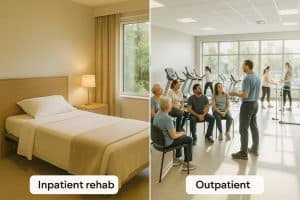
 Choosing between inpatient and outpatient rehab is one of the most important decisions when seeking help for addiction. Both treatment options can provide professional counseling, recovery education, and support for lasting change. However, they offer different levels of structure, supervision, and flexibility. The right choice depends on more than personal preference. Factors such as substance use history, withdrawal risks, mental health, home environment, and available support all play a role. Understanding these differences can help you make an informed decision and find addiction treatment that meets your needs.
There is no single recovery plan that works for everyone. Some people need a structured residential environment to focus on treatment, while others can make meaningful progress through outpatient counseling while continuing to live at home. The first step is understanding what each option offers and determining which level of care can provide the right balance of safety, support, and independence.
Understanding the Difference Between Inpatient and Outpatient Rehab
Inpatient and outpatient rehab share an important goal: helping individuals address substance use and build healthier lives. The main difference is where treatment takes place and how much supervision and daily structure a person receives.
What Is Inpatient or Residential Rehab?
Inpatient or residential addiction treatment involves living at a treatment facility while receiving structured care. Individuals follow a planned schedule that may include individual counseling, group therapy, recovery education, medical services, and activities that support physical and emotional well-being.
This setting can be helpful for people who need separation from environments associated with substance use or who require a higher level of daily support.
Residential treatment may offer:
- A structured daily routine focused on recovery.
- Regular access to counselors and treatment professionals.
- Individual and group therapy.
- Support with identifying triggers and managing cravings.
- Opportunities to develop healthy habits and communication skills.
- A recovery-focused environment with fewer everyday distractions.
The exact services depend on the facility. It is important to distinguish residential rehabilitation from hospital-based inpatient care. Hospital inpatient treatment provides medical or psychiatric care for people with acute or unstable conditions, while residential programs generally provide structured treatment in a non-hospital setting.
What Is Outpatient Rehab?
Outpatient rehab allows individuals to receive addiction treatment while continuing to live at home. Clients attend scheduled counseling sessions, therapy groups, and other services based on their treatment plan.
This option can be appropriate for people whose clinical needs can be safely managed outside a residential setting and who have a reasonably stable living environment.
Outpatient treatment may include:
- Individual addiction counseling.
- Group therapy and peer support.
- Mental health counseling.
- Relapse prevention education.
- Medical appointments and medication management when appropriate.
- Help developing routines and practical coping strategies.
- Continuing care following a more intensive treatment program.
Some people attend outpatient sessions once or twice a week, while others need more frequent support through an intensive outpatient program. The schedule should reflect the person’s needs rather than simply the amount of free time available.
5 Important Factors to Consider Before Choosing Rehab
Before deciding between inpatient and outpatient treatment, take time to consider the circumstances that may affect recovery. A qualified treatment professional can help assess these factors and recommend an appropriate level of care.
1. How Severe Is the Substance Use, and Are There Withdrawal Risks?
The type of substance, frequency of use, duration of use, and previous withdrawal experiences can influence treatment recommendations.
Some people experience significant physical or psychological symptoms when they stop using alcohol or drugs. Withdrawal from alcohol and certain sedatives can be life-threatening. Opioid withdrawal can also involve serious discomfort and complications, particularly when other health conditions are present.
Medical assessment is essential when physical dependence is possible. A person may need medically supervised withdrawal management before beginning residential or outpatient rehabilitation.
It is important not to assume that outpatient care is safe simply because someone wants to remain at home. Likewise, a history of substance use does not automatically mean residential treatment is necessary. Professional assessment helps determine what level of supervision is appropriate.
2. What Mental Health Support Is Needed?
Addiction and mental health concerns often overlap. Anxiety, depression, trauma, and other psychological conditions may contribute to substance use. At the same time, ongoing substance use can worsen mental health symptoms.
For this reason, effective addiction treatment should consider the whole person rather than focusing exclusively on substance use.
The Value of Integrated Mental Health Treatment
Some individuals benefit from treatment that combines addiction counseling with mental health services. Depending on their needs, this may include cognitive behavioral therapy, individual counseling, psychiatric assessment, group therapy, or medication management.
For example, someone who uses alcohol to cope with anxiety may need help understanding both the drinking pattern and the emotional distress behind it. Treating only one concern may leave the other unresolved.
When comparing rehab programs, ask whether qualified professionals can assess co-occurring mental health conditions and coordinate appropriate care. If someone is experiencing severe psychiatric symptoms, suicidal thoughts, or an immediate safety concern, urgent professional or emergency help is necessary.
3. Is the Home Environment Supportive of Recovery?
A person’s living environment can make a significant difference in the recovery process.
Outpatient rehab requires individuals to return home after scheduled treatment sessions. This arrangement may work well when the home environment is reasonably stable and supportive. However, ongoing exposure to substance use, conflict, unsafe relationships, or other strong triggers can make recovery more difficult.
Residential treatment may provide useful distance from these pressures. It gives individuals time to focus on treatment while developing skills for managing difficult situations.
Consider whether the person has:
- A safe and stable place to live.
- Supportive family members or friends.
- Distance from people who encourage substance use.
- Access to transportation or reliable internet for treatment appointments.
- A routine that allows consistent participation in care.
- Someone to contact when cravings or emotional difficulties arise.
If the home environment is not supportive, discuss alternatives with a treatment professional. Housing assistance, family counseling, or a different level of care may be important parts of the plan.
4. How Much Structure and Flexibility Are Needed?
Inpatient and outpatient rehab offer different approaches to daily scheduling.
Residential care provides a structured environment where much of the day is organized around treatment and recovery activities. This can be helpful for people who struggle with unstructured time, frequent triggers, or difficulty maintaining consistent routines.
Outpatient treatment offers greater flexibility. Individuals may continue working, attending school, caring for family members, or meeting other responsibilities while receiving professional support.
However, flexibility should not come at the expense of treatment participation. Someone who needs frequent clinical contact may find that a standard outpatient schedule does not provide enough support.
Consider Intensive Outpatient Treatment
An intensive outpatient program, commonly called IOP, provides more structured treatment than traditional outpatient care without requiring an overnight stay. Depending on the program, it may include several group counseling sessions each week, individual therapy, medical appointments, and relapse prevention planning.
Some programs also offer partial hospitalization or high-intensity outpatient services. These provide more frequent treatment than IOP while allowing participants to return home outside scheduled hours.
These options can be useful for people who need substantial support but do not require residential or hospital-based care. The appropriate choice depends on a clinical assessment.
5. What Happens After the Initial Treatment Program?
Recovery does not end when someone completes a residential stay or reaches the final appointment in an outpatient program. Returning to everyday responsibilities can introduce new challenges, including work pressure, relationship concerns, financial stress, and exposure to familiar triggers.
A strong treatment plan should include continuing care.
Aftercare may involve:
- Regular outpatient counseling.
- Peer support or recovery meetings.
- Family therapy when appropriate.
- Mental health treatment.
- Medication follow-up when prescribed.
- Relapse prevention planning.
- Healthy routines and meaningful activities.
- Connections to community resources.
Ask each program how it prepares clients for life after treatment. A clear transition plan can help individuals maintain support as their needs change.
How Individualized Treatment Improves Recovery
The most appropriate rehab program is not necessarily the one with the longest schedule or the greatest number of services. It is the one that can respond to the individual’s clinical needs, personal circumstances, and recovery goals.
Individualized treatment begins with a comprehensive assessment. Treatment professionals consider substance use patterns, physical health, mental health, previous treatment experiences, relationships, and environmental factors.
Evidence-Based Counseling and Behavioral Support
Counseling helps individuals understand the thoughts, feelings, and situations connected to substance use. It also provides opportunities to practice healthier responses.
Cognitive behavioral therapy, for example, can help clients recognize unhelpful thought patterns and develop more constructive ways to manage stress. Motivational approaches can help people explore their reasons for change and strengthen their commitment to treatment.
Group counseling offers another valuable source of support. Participants can learn from others, practice communication skills, and reduce the isolation that often accompanies addiction.
Holistic and Faith-Based Approaches
Some treatment programs incorporate holistic wellness activities to complement clinical care. These may include mindfulness, physical activity, nutrition education, stress management, and creative activities.
For individuals who value spirituality, faith-based services may provide additional encouragement, reflection, and a sense of purpose. However, these services should reflect personal preferences and remain part of an appropriate treatment plan.
Holistic and spiritual practices are not substitutes for necessary medical or psychological care. Their value lies in supporting broader well-being alongside professional addiction treatment.
Questions to Ask Before Enrolling in a Rehab Program
Once you understand the main treatment options, ask practical questions before making a decision. Clear answers can help you determine whether a program is appropriate.
Consider asking:
- How do you assess which level of care is right for each person? Look for a thorough assessment rather than a recommendation based on a single factor.
- What addiction and mental health services are available? Ask about individual counseling, group therapy, medical care, and treatment for co-occurring conditions.
- Who provides the treatment? Understand the qualifications and roles of the clinical and medical professionals involved.
- How do you prepare clients for relapse risks and difficult situations? A useful program should teach practical skills and create a plan for ongoing support.
- What happens when treatment ends? Ask about aftercare, outpatient referrals, follow-up appointments, and community resources.
- What are the costs and payment options? Request clear information about fees, insurance coverage, and any additional expenses.
Avoid programs that guarantee recovery or claim that one treatment method works for everyone. Addiction is a complex health condition, and treatment should be realistic, individualized, and responsive to progress.
Take the First Step Toward the Right Addiction Treatment
Choosing between inpatient and outpatient rehab starts with understanding what you need to recover safely and effectively. Residential treatment may provide the structure and distance from triggers that some people require. Outpatient care may offer the flexibility and professional support others need while continuing to live at home. Intensive outpatient services can provide an additional level of structure between these options.
The most important consideration is finding care that addresses substance use, mental health, personal circumstances, and long-term recovery goals. A qualified treatment professional can help assess your situation and explain which options are appropriate.
If you or someone you care about is struggling with addiction, do not wait until the situation becomes more difficult. Reach out to a healthcare provider or addiction treatment professional to discuss available services. Asking questions is a practical first step toward a treatment plan that supports better health, greater stability, and lasting recovery.